Why Spring Creates So Much Driveway Mud
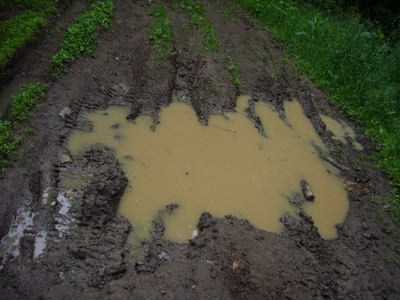
Dirt and gravel driveways can become extremely muddy during the spring thaw. Even when the surface appears to be thawed, the soil underneath may still be frozen. Melting snow and spring rain cannot drain properly through that frozen layer, so the water becomes trapped near the surface.
As the upper layer of soil absorbs more water, it loses its strength and stability. Cars, trucks and construction equipment then press into the softened ground, creating ruts and forcing water and mud toward the surface. This is why a driveway that seemed solid during winter can quickly turn into a muddy mess when temperatures begin to rise.
Frost Can Remain Below the Surface
The ground does not always thaw evenly. Sunlight and warmer air may soften the top few inches while frost remains deeper below the driveway. That frozen soil acts like a barrier and prevents water from draining downward.
Repeated freezing and thawing can also move and loosen the soil. When the ground becomes saturated, the driveway base can shift under the weight of vehicles. This movement creates low areas where additional water collects and makes the problem worse.
Conditions That Make a Driveway Muddier
Several conditions can contribute to excessive spring mud:
- A driveway constructed without enough compacted aggregate base material
- Low areas that collect melting snow and rainwater
- A driveway without a proper crown or drainage slope
- Soft topsoil or unstable material left beneath the driveway
- Heavy vehicle traffic while the ground is saturated
- Downspouts or surrounding property directing water toward the driveway
Adding More Gravel May Only Be a Temporary Fix
Placing additional gravel over the muddy surface may provide temporary relief. However, if the underlying soil is saturated or the driveway does not drain correctly, the new stone can eventually be pressed into the soft ground.
Without correcting the underlying drainage and base problems, the mud and ruts may return during the next wet season. A long-term improvement requires attention to the material below the finished driveway—not only the visible surface.
Proper Base Preparation Makes a Difference
A durable driveway begins with proper excavation and ground preparation. Unstable soil, organic material, large roots and tree stumps should be removed from beneath the area where the driveway will be constructed.
The prepared area should then receive suitable aggregate base material placed and compacted to create stable support. Proper elevations must also be established so water drains away from the driveway, garage and surrounding structures.
Good preparation is especially important in Southwest Michigan and Northern Indiana, where seasonal freezing, thawing and heavy spring moisture place additional stress on driveways.
A Concrete Driveway Provides a Lasting Surface
For homeowners who are tired of dealing with recurring mud, ruts and loose stone, a properly constructed concrete driveway can provide a cleaner and more durable surface.
Concrete installation still depends on the quality of the work beneath the slab. Proper excavation, a compacted aggregate base, correct drainage elevations, suitable concrete, steel reinforcement and carefully planned control joints all contribute to long-term performance.
Control joints provide planned locations for the natural shrinkage and movement that occur in concrete. Although no contractor can truthfully promise that concrete will never crack, proper preparation and professional installation help reduce avoidable problems and encourage the concrete to perform as intended.
Planning a New Concrete Driveway
If your dirt or gravel driveway becomes muddy every spring, Marc Todd Concrete can evaluate the area, existing elevations and drainage conditions before construction begins. Our goal is to prepare the site correctly and install a concrete driveway designed for the weather conditions found throughout Southwest Michigan and Northern Indiana.
We have more than 35 years of experience constructing concrete driveways, parking areas, turnarounds, garage aprons and other residential concrete surfaces.