· Marc Todd Concrete
The same concrete project can cost more when it is scheduled in cold weather. Across Southwest Michigan and Northern Indiana, the season affects both the ready-mix bill and the work needed at the jobsite. For driveways, patios, sidewalks, steps, garage floors and other concrete installations, colder conditions can add preparation, protection, labor and return trips.
Understanding those costs helps explain why a quote for a late-season project may differ from one planned for milder weather.
These are separate expenses. Paying a winter charge on the concrete delivery does not cover the contractor's work to prepare and protect the site.
Our ready-mix supplier's bills include a line for Winter Charges beginning in November. Heating the mixing water at the plant and using cold-weather accelerating admixtures can increase the cost of the concrete itself. The supplier's charges and the mix requirements are part of pricing the individual job; November is our supplier's billing schedule, not a universal start date for cold-weather precautions.
Accelerators can help concrete set and develop strength sooner in cold conditions, but they do not make it freeze-proof. Proper curing and protection are still necessary.
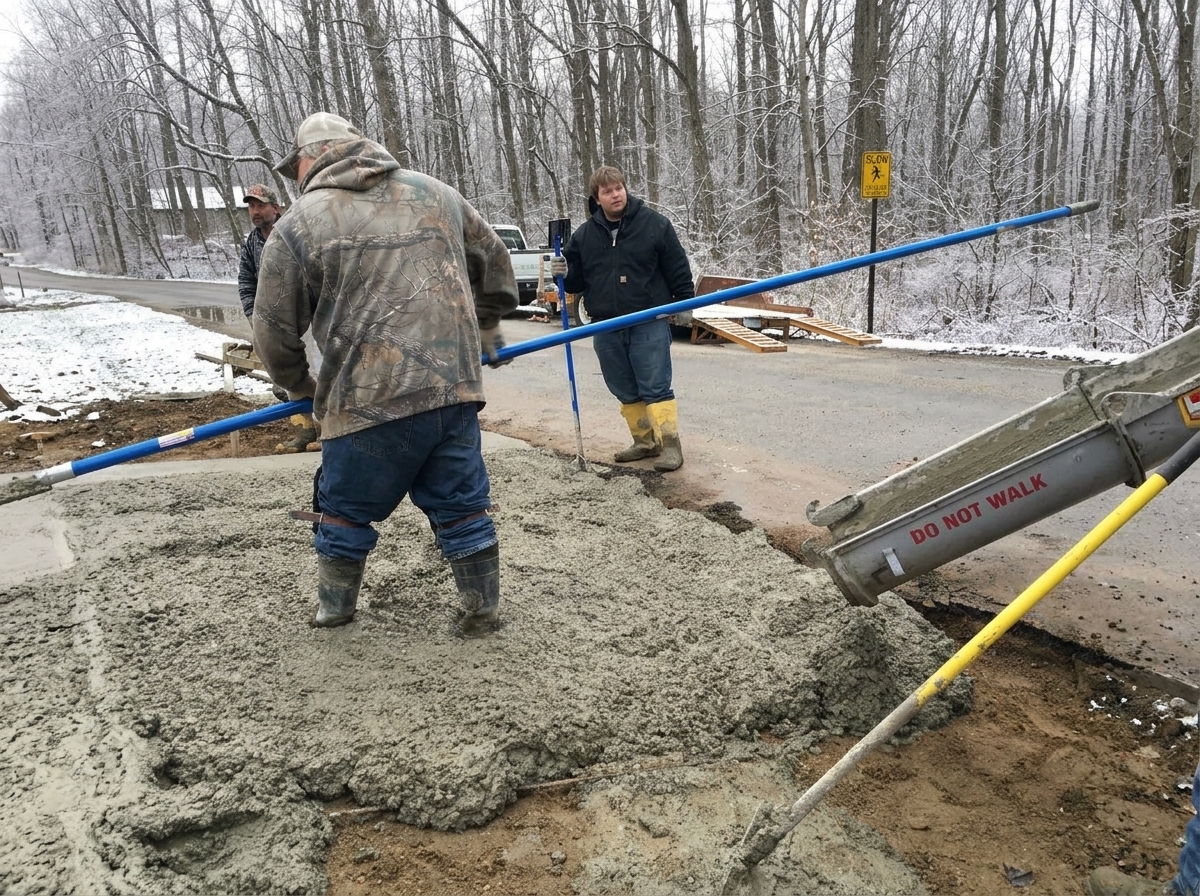
Preparation starts before the truck arrives. Blankets, straw or insulation may be needed to keep the prepared ground from freezing. If the ground is already frozen, appropriate heating and thawing must be completed before placement. Those materials must be installed, handled and removed as the work progresses.
Concrete must not be placed on frozen ground, snow or ice. A frozen base that later thaws can move or settle beneath the slab. Protecting the ground ahead of time is part of preparing a sound foundation for the work.
Once the concrete is poured and finished, it may need insulating blankets or other planned protection while it gains strength. Cold temperatures slow strength development. Protection has to suit the actual weather, concrete temperature, mix and project, rather than a fixed number of days on the calendar.
The work can include placing and securing covers, checking conditions, adjusting protection and removing it appropriately when the concrete is ready. An accelerator in the mix does not eliminate these steps.
Saw-cut control joints must be made when the concrete can be cut without excessive edge damage and before random cracking occurs. Cooler conditions can change that window, but the crew cannot simply postpone cutting for a set period.
On a protected cold-weather job, the crew may need to return, uncover the areas being cut, saw the joints when the concrete is ready and cover the work again. Another trip may be needed to collect blankets and strip forms when conditions and concrete strength allow. Each visit adds travel, setup and labor that may not be necessary on the same project in milder weather.
Seasonal costs depend on the project and forecast. A small sheltered area will not necessarily need the same protection as a large exposed slab. The amount of concrete, access, ground conditions and required protection all matter, so there is no single winter surcharge that fits every job.
If your schedule is flexible, discuss timing before the work is booked. Planning ahead may reduce weather-related costs, but the final schedule still needs to account for suitable conditions. Skipping ground preparation or cold-weather protection to lower the price can put the finished work at risk.
Marc Todd Concrete provides concrete services throughout Southwest Michigan and Northern Indiana. Explore our concrete services or request an estimate and discuss the timing, preparation and protection your project may need.
Read our concrete contractor questions and answers for general project planning. For care of existing concrete, see our separate winter concrete damage and fall sealing guide.
Technical background: NRMCA: Cold Weather Concreting and ACI: Guide to Cold Weather Concreting. Supplier billing and jobsite examples above reflect our explanation of seasonal project costs.